
The business challenge
Round-the-clock deliveries in different time zones
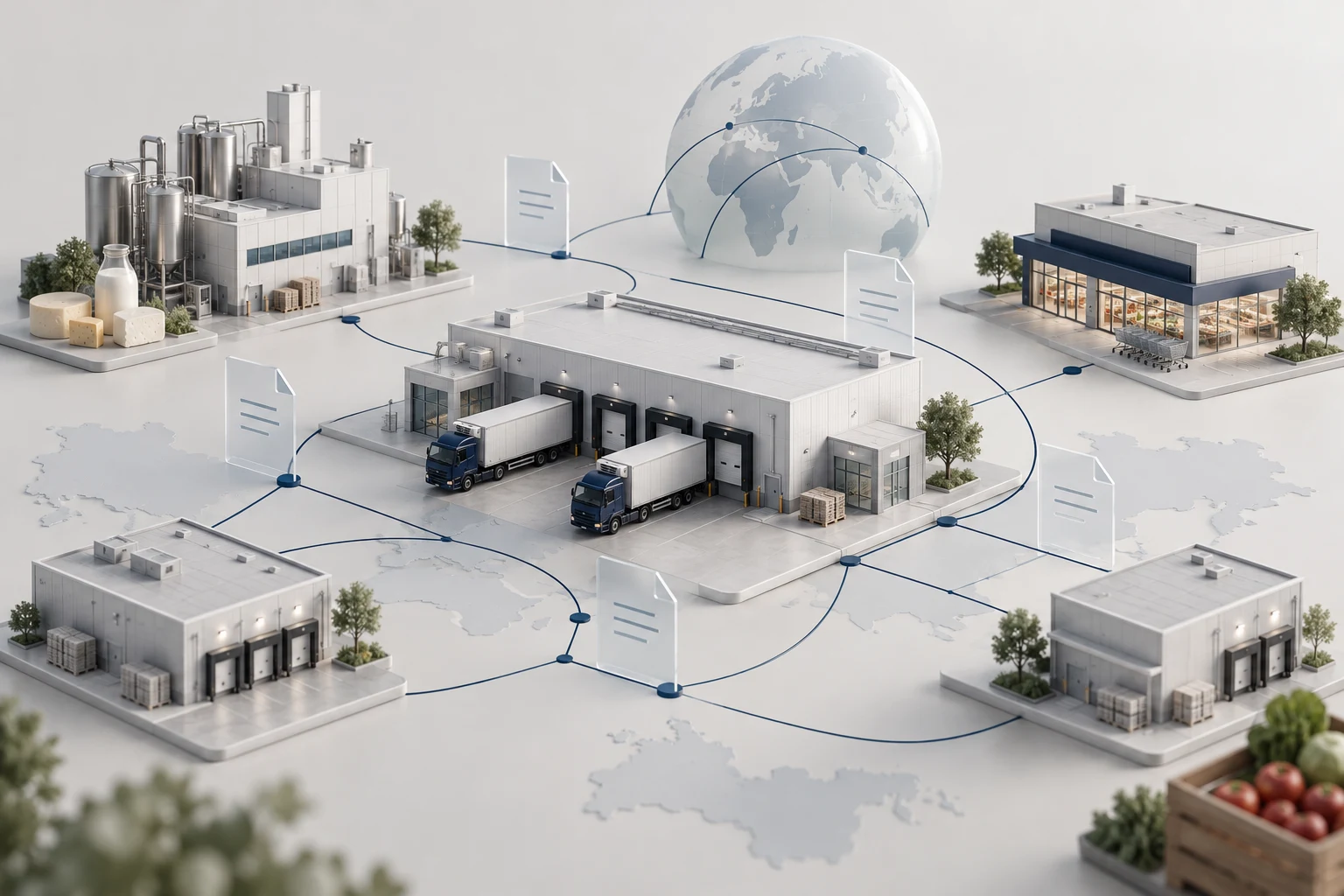
The group operates around the clock and supplies major retail chains, including METRO, Pyaterochka, Perekrestok, Chizhik, VkusVill and Lenta, as well as other corporate customers.
Deliveries are made directly and through logistics operators, using different transport arrangements and spanning multiple time zones. In this environment, launch readiness depends on the entire chain, from the sender’s accounting system to the actions of the carrier and recipient.
Technology and architecture
eTWB integration with 1C:ERP and 1C:Accounting
The KT team integrated electronic transport waybills into the existing information environment. Integration with 1C:ERP and 1C:Accounting connected the service to the systems the companies use every day.
waybill service
Pre-launch checks
Testing the entire transport chain
Testing received particular attention. The main phase took place within the group: each legal entity took turns acting as sender, recipient, carrier and freight forwarder. Switching roles made it possible to test the processes from different perspectives and rehearse interactions before launch.
The group’s regular carriers joined the final testing phase. The work extended beyond the customer’s organisation: KT specialists advised partners on electronic waybills and helped prepare joint transport scenarios.
Role shifts
legal entities
Each legal entity alternately participated in different roles.
Regular
carriers
Joint transport scenarios and advice for partners before launch.
How KT works
Think. Design. Build.
Think.
We considered the task as one delivery process involving several companies, different participant roles, accounting systems and external carriers. This helped identify in advance which scenarios to test and who needed to prepare for launch.
Design.
We designed the integration of Kontur.Logistics with 1C:ERP and 1C:Accounting. Electronic waybills were incorporated into the existing information environment and connected to the companies’ daily work.
Build.
We implemented and tested the integration in stages: first within the group, with legal entities switching roles, then with regular carriers. Advising partners was part of preparing the entire delivery chain for launch.
The sequence of work delivered the result: carefully defined scenarios set the architectural requirements, and testing confirmed that systems and transport participants were ready. KT combined technical implementation with preparation of the actual business process.
In progress
Launch by September 1
By 1 September, the group had begun using electronic transport waybills while continuing deliveries to retail chains and other customers. Corporate systems, employees and carriers were ready for launch.
Group and Regular Carriers Start Working with eTWB
Business automation and digitalisation require coordinated work by everyone involved in the process. Alongside system integration, teams need to rehearse real scenarios, prepare employees and establish working relationships with partners. This is how a technology solution becomes part of daily business operations.